GAUDIYA VAISHNAVISM
Krishna is smaller than the smallest and situated personally in ever atom , this the third Canto of the Srimad Bhagavatam confirms .The world Anu is used .
How many atoms in a microbe how many microbes on a pin head…
Ai using scientific analysis…. A typical bacterium contains roughly hundreds of trillions of atoms (around \(10^{14}\)), while a pinhead (~1–2 mm across) can hold roughly 1 million to several million bacteria in a single layer.
Atoms in a Microbe
- Typical bacterium: Often around hundreds of trillions of atoms ((10^{14})), though estimates vary widely depending on the microbe’s size and species (from billions up to quadrillions).
- Diameter comparison: Atoms are roughly (0.1\text{–}0.5\text{ nm}) across, while typical bacteria span hundreds to a few thousand nanometers—making a bacterium thousands of atoms wide.
- Smaller microbes / viruses: Viruses are generally about an order of magnitude smaller than typical bacteria, so they contain far fewer atoms.
Microbes on a Pinhead
- Typical bacteria (~1 µm): About 1 million to a few million cells can fit in a single layer on a ~1–2 mm pinhead. Most users on Quora agree that order-of-magnitude estimates for a single layer on a ~2 mm pinhead sit around (10^6\text{–}10^7) for larger bacteria and (10^7\text{–}10^8) for smaller bacteria, while stacking or biofilms can push counts much higher.
- Smaller vs. larger microbes: Ultra-small microbes or viruses can pack in much higher numbers (hundreds of millions or more), whereas larger single-celled microbes like yeast fit in much smaller numbers.
The mysterious position of Krishna as the smallest of the smallest or the biggest of the biggest has been explained by Srila AC Bhaktivedanta Swami Prabhupada in his writings .
Eg .
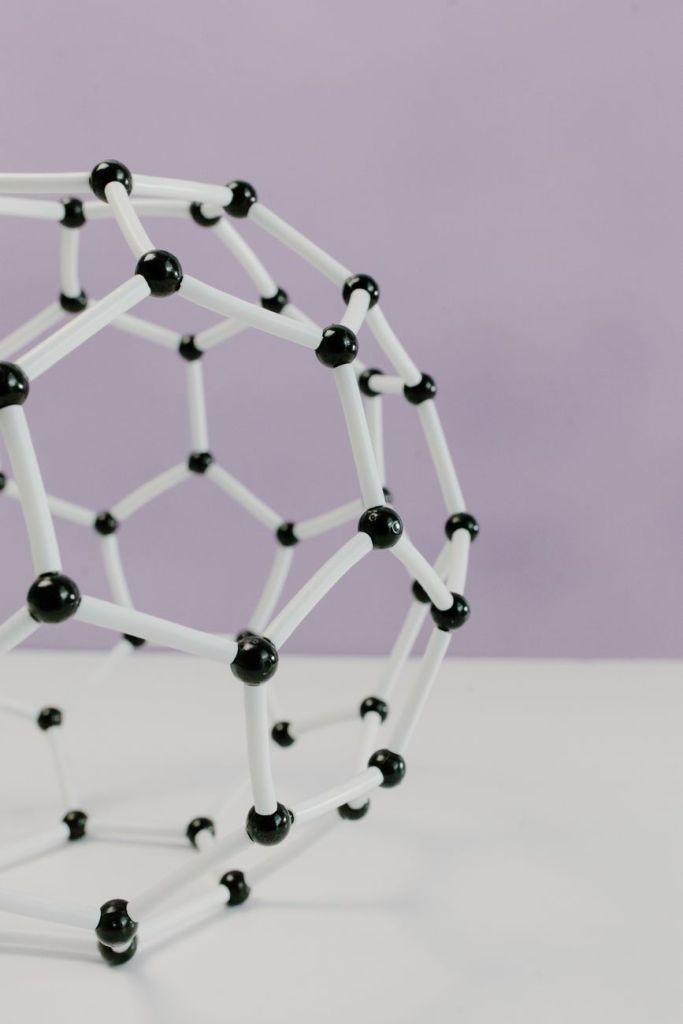
Yes, Śrīmad-Bhāgavatam Canto 3, Chapter 11 details atomic particles using the Sanskrit terms paramāṇu and aṇu, while Vedic scriptures describe the Supreme Lord as aṇor aṇīyān (“smaller than the smallest”).
Atomic Definitions in Canto 3
In Śrīmad-Bhāgavatam 3.11, the sage Maitreya explains the calculation of time starting from the smallest indivisible units of matter:
- Paramāṇu. Described in Text 3.11.1 as the ultimate, indivisible, and invisible particle of material existence.
- Aṇu. Defined in Text 3.11.5 (aṇur dvau paramāṇū syāt) as a double atom formed when two paramāṇus combine.
- Trasareṇu. Formed by the combination of three aṇus (six paramāṇus), representing a particle large enough to be seen floating in a beam of sunlight.
http://www.thevedicspectator.com