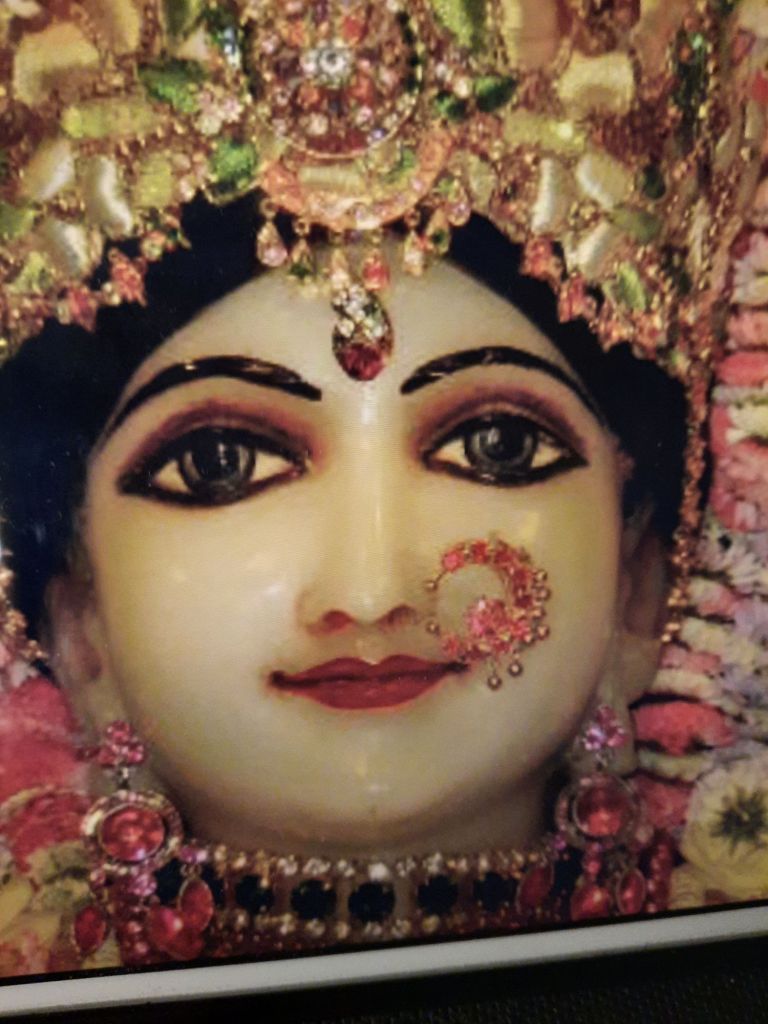
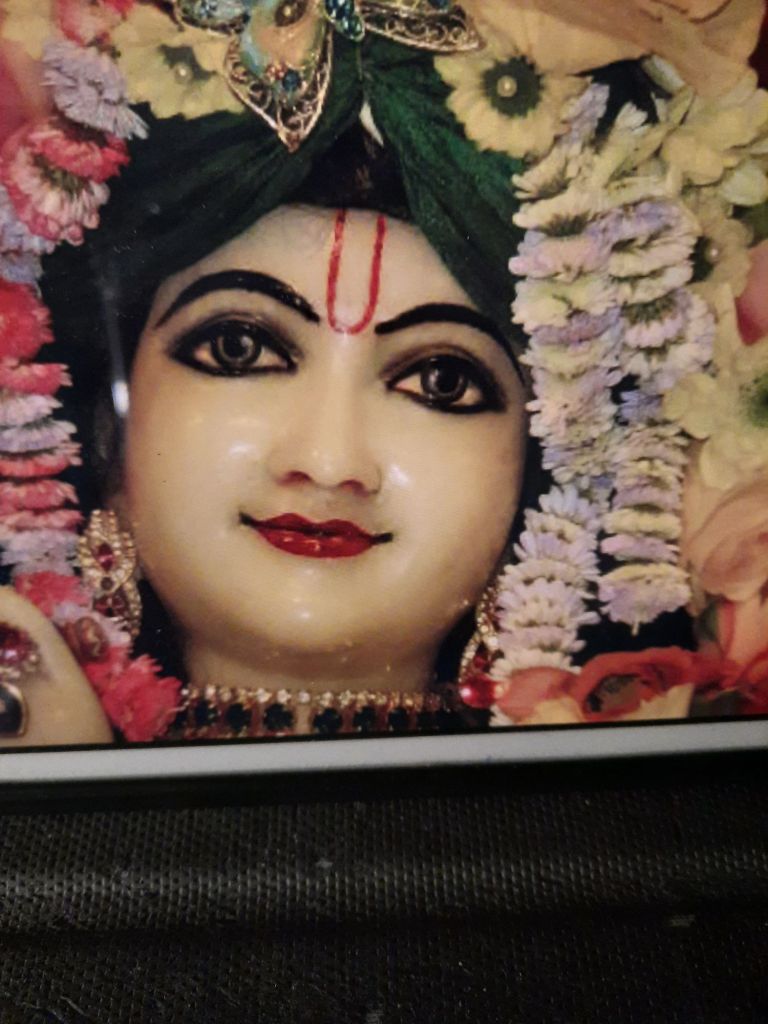
God is never worshipped alone , in the real sense, God in never alone ….
Thus is the Vedas according to the approach towards Divinity, we find .
RADHA KRISHNA, SITA RAMA and LAXMI NARAYANA …
It’s also significant that through the trancendental female, the trancendental male is approached . Their names come first , as in Hare Krishna, Hare means Radharani..
In the Gaudiya Vaishnava tradition, approaching Lord Krishna through Srimati Radharani is a central philosophy. As Srila Bhaktisiddhanta Sarasvati Thakura noted, “We worship Krishna because He’s with Radha“, emphasizing that Radharani is the personification of Krishna’s hladini-shakti (His pleasure potency) and His topmost devotee.
Key aspects of this teaching include:
Because Srimati Radharani is hari-priya (very dear to Krishna) and compassion personified, approaching Krishna through her mercy makes the spiritual path far easier and more successful
The Christian theologically cultures also have the worship of Jesus’s mother Mary , and Mary Magdalena one of Jesus’s leading disciples is worshipped.
In the Vedas the Prakriti and Purusha are mentioned, there is one supreme enjoyer , the Purusha , the supreme male , every other living being is considered Prakriti, female , the enjoyed .
The esoteric Christians such as
St. Catherine of Bologna (“Bride of Christ”) have similar ways.
St. Catherine of Bologna (1413–1463), an Italian Poor Clare nun, mystic, and artist.
- Connection to “Brides of Christ”: In Catholic tradition, consecrated nuns and female mystics are referred to as Brides of Christ because they take vows of chastity and dedicate their lives entirely to Jesus..
So many female connections within many theological cultures are to be found..
Ai give the following…
- Ancient Civilizations and Goddess Worship
Long before centralized monotheistic systems predominated, early human cultures widely revered female deities associated with fertility, creation, wisdom, and war:
- Sumer and Mesopotamia: Inanna (later known as Ishtar) was celebrated as the Queen of Heaven and Earth, goddess of love, war, and political power, featured in some of humanity’s oldest written poetry.
- Ancient Egypt: Isis was venerated for over 3,000 years as a mother, protector, and mistress of magic, with her influence extending deep into the Greco-Roman world. Other key figures included Hathor (music and joy) and Sekhmet (fierce protection).
- Prehistoric and Mediterranean Cultures: Archaeological findings and historical studies (such as those exploring the Goddess movement) point to widespread veneration of mother goddesses and earth-based feminine archetypes across Neolithic Europe and the Near East.
http://www.thevedicspectator.com