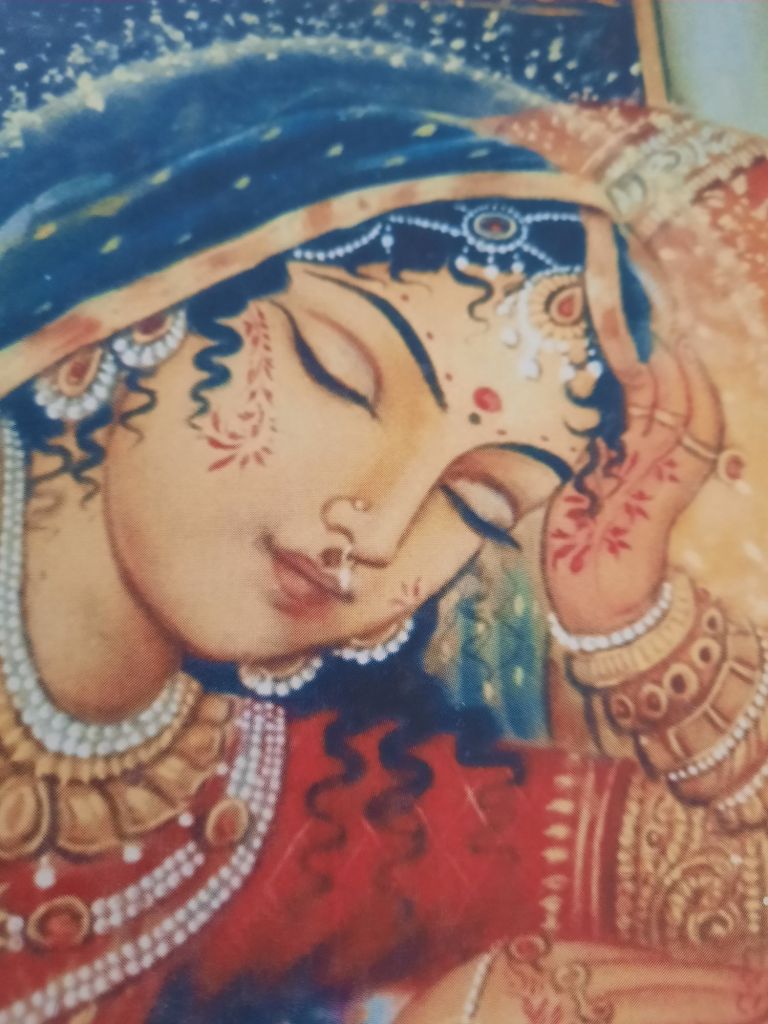
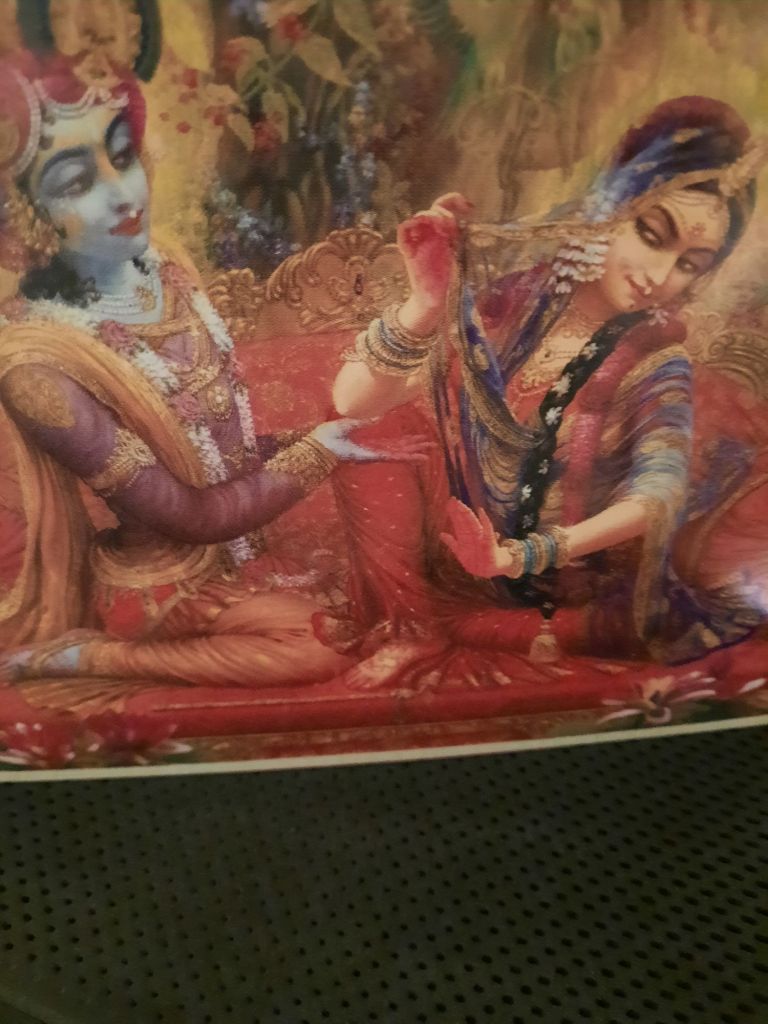
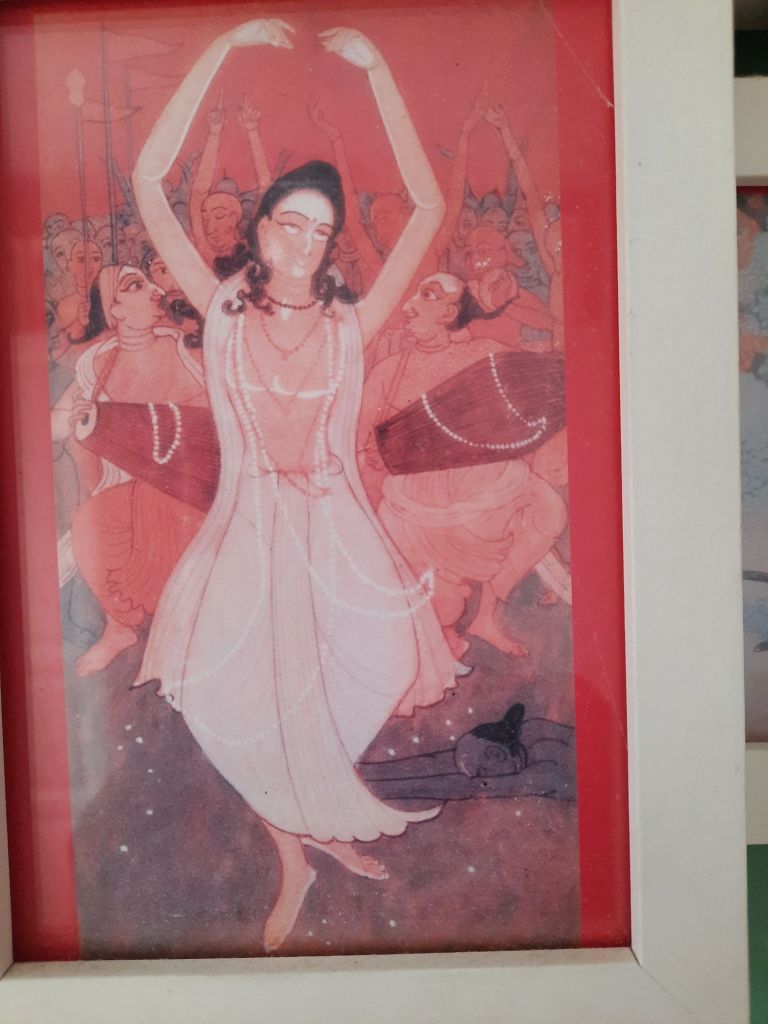
These three positions are the only three positions the living entities can make a stand in .Two of them are temporary stands, and one is a permanent stand. Within the permanent stands , there are two positions one in the deep medative smaranam of Radha Krishna nitya lila, and the other within the active Sankirtana movements of Sri Caitanya Mahāprabhu, when properly practiced both practices are synonymous. The activities and pastimes of Sri Caitanya Mahāprabhu and His associates have demonstrated this trancendental truth . The soul on soul trancendental activities are awakened by the Sankirtana movements, the absolute realms of sound , touch , taste, smell, and vision become absolute, and Lord Krishna is present . This trancendental position is acquired by association , even of just one moment , of the pure representatives of Krishna and Mahāprabhu. The trancendental good wishes , blessings, and the instructions of the pure representatives of Krishna should be sought.
All these matters are full described in the Bhagavad Gita, the Srimad Bhagavatam, the Caitanya Caritamrta and the members of the Gaudia Vaisnava param para acaryas have elaborated upon them , famously within the West Srila AC Bhaktivedanta Swami has made all these litratures accessible all over the world, his mercy and compassion is incomprehensible, such are the activities of the residents of Goloka Vrndavana.
Śrīla B.R. Śrīdhara Dev-Goswāmī Mahārāja elegantly maps out the evolution of the soul’s consciousness by contrasting three progressive ontological states: the deep sleep of Brahman (suṣupti), the active illusions of material life (jāgrata/svapna), and being transcendentally awake in spiritual service to Kṛṣṇa (divya-jāgrata/bhakti).
He breaks down these three dimensions of the soul’s experience through the lens of tataṣṭhā-śakti (the marginal potency) and the awakening process:
1. The “Deep Sleep” of Brahman Realization (Suṣupti)
Śrīla Śrīdhara Mahārāja explains that before the creative movement of the material universe begins, or when a soul achieves impersonal liberation (mukti), it resides in a state of static equilibrium (tataṣṭhā).
He references the Manu-saṁhitā (prasuptam iva sarvataḥ) to describe the unmanifest Brahman platform as a state of unconscious deep sleep. In this zone, there is no differentiation, no active ego, and no objective world.
While this state is free from material suffering, Śrīla Śrīdhara Mahārāja emphasizes that it is a dormant, non-differentiated mass of consciousness. The soul is a potential spark but has not yet developed its unique spiritual individuality or active relationship with the Divine.
2. The “Active Illusions” of Material Life (Māyā)
When the soul exercises its free will to explore independent exploitation, it awakens from the static equilibrium of Brahman and enters the material world.
Śrīla Śrīdhara Mahārāja notes that just as we abruptly and inexplicably awaken from deep sleep into a specific dream or daily environment, the soul “awakens” into the material grid under the glance of Mahā-Viṣṇu.
Ironically, this “waking state” (jāgrata) in the material world is actually an active dream state. The soul is miscalculating reality, identifying with a temporary physical body, and caught in the restless, active modifications of māyā. It is an illusion because the soul acts as an artificial master of nature rather than a servant.
3. Transcendentally Awake in Spiritual Service (Sevonmukha)
Real wakefulness is achieved only when the soul transcends both the dormancy of Brahman and the false activities of māyā.This is the ultimate “wake-up call” for the soul. Śrīla Śrīdhara Mahārāja explains that when a soul comes into contact with a genuine saint (sādhu-saṅga), the innate, sleeping Kṛṣṇa consciousness within is ignited—much like one candle lighting another.
The sound of the Mahā-mantra pierces through the material senses, mind, and intellect to vibrate the real soul. When the thinking, feeling, and willing faculties are fully engaged in loving service (sevonmukha), the soul attains its true, active spiritual individuality
http://www.thevedicspectator.com