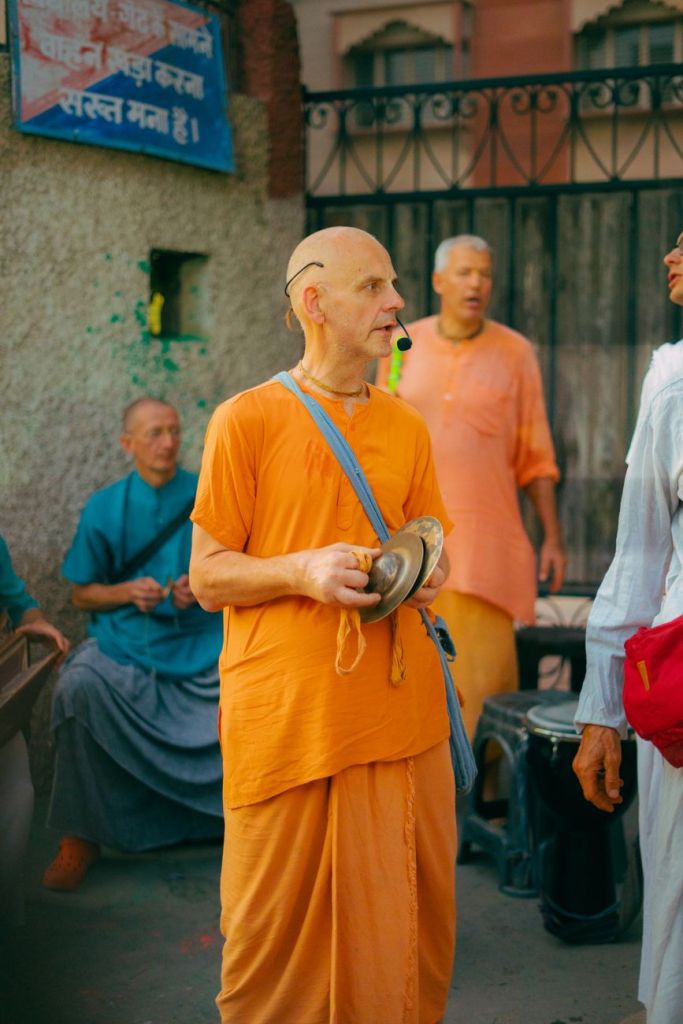
The “modern day Nama Acarya speaks “
“Aindra Prabhu’s Teachings on chanting , Aindra Prabhu frequently cited predecessor teachers like Srila Bhaktisiddhanta Sarasvati Thakur, noting that chanting for money, fame, or to impress an audience (bhukti-nama) reduces sacred chanting to a worldly business or sense gratification . He maintained that kirtan is a free-for-all expression of love for Krishna, not a theatrical performance with tickets, drama, or the intent to captivate wealthy crowds. Pure Name vs. Resemblance: He emphasized shuddha-nama (the pure name) sung in deep separation and surrender, contrasting it with commercialized or superficial chanting that fails to awaken true spiritual devotion (bhakti) in the heart . Aindra lived an intensely austere life as a renunciate at the Krishna-Balaram Mandir, sustaining the continuous 24-hour sankirtan without treating it as a paid job or career. Handling Donations: When pilgrims or well-wishers left money near his instruments out of respect, he would promptly have it placed directly into the temple’s official deity donation box rather than keeping it for personal gain. Funds for service: While funds were occasionally collected or accepted strictly to maintain the physical necessities of ongoing temple projects and feeding programs (like Food for Life), the chanting itself was never bartered, sold, or performed as a paid service.KIRTAN . For Aindra Prabhu, kirtan was never a social event or a musical performance; it was a pure, internal offering to Sri Sri Radha-Shyamasundara.
He taught generally..
Shared Devotion . Kirtan is not a performance meant for an audience and a star . It is a circle of equals where hearts open together in harmony . Both leader and follower dissolve their egos into the sound vibration. Never mind ripe mangos or unripe , a mango is a mango .
Placing unripe mangoes (or other climacteric fruits) next to ripe ones causes them to ripen faster because ripe fruit releases Ethylene, a natural plant hormone gas that triggers ripening in nearby produce.
http://www.thevedicspectator.com