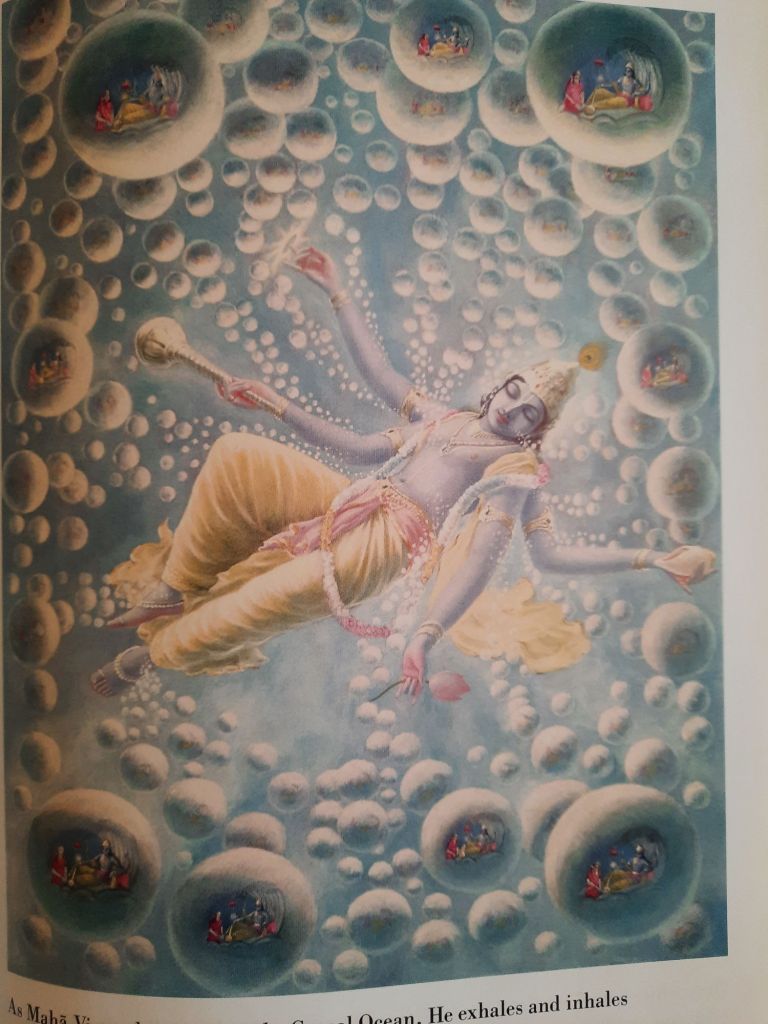
The blogsite, the Vedic spectator, summarises the teachings of the Vedas, including the Srimad Bhagavatam and Bhagavad Gita . The Vedic spectator seeks to bring to the attention of modernity how the sciences , philosophy , social sciences , and political sciences within the Vedas originate from a timeless culture and are as applicable today as much as any time periods within numerous cyclic universal expansions . The Vedas are the breathing of Lord Visnu and are ” masterminded ” by Him . They are so designed as to eternally bring numerous benefits to mankind . These universal teachings , having once been throughly understood , can be practically applied by those who are clearly realising their self-evident truths , truths that are applicable, and related to scientific dualism . This means that the consciousness alone and matter , in the form of atoms , elements, and compounds , as well as ethereal subtle matter , are both two entirely and clearly distinct energies. The importance of grasping scientific dualism is essential because the fundamentals of every one of the sciences are reshaped and redirected . Social and spiritual mobility gathers pace , and the equality of all beings before their originator begins to be widely accepted. A much simpler and peaceful lifestyle becomes favoured , the full potential of an inner consciousness is discovered and brought to the forefront.
The Vedic Spectator acts as a philosophical and spiritual bridge, aligning ancient Vedic literature with modern realities. It presents the Vedas, Srimad Bhagavatam, and Bhagavad Gita not merely as religious texts, but as comprehensive blueprints for applying consciousness to science, sociology, and political philosophy in the contemporary world The site advocates for an elevated societal model based on these ancient texts through several key frameworks :Bridging Science and Theology: It explores how theological sciences, cosmology, and the understanding of the Mahat-tattva (the total material energy) interact with responsive karmic and universal laws. Societal & Spiritual Mobility: The platform highlights the value of the Sattvic lifestyle—living in the mode of goodness, which brings mental stability, clarity, and higher spiritual evolution Political Philosophy: It critiques modern globalized, hyper-materialistic systems in favor of decentralized, traditional nation-states and culturally grounded communities. Inner Consciousness: It emphasizes that cultivating one’s inner potential through spiritual discipline is the primary pathway to achieving a peaceful, simplified life. Such a life reveals the truth of the existence of the trancendental Lord Krishna and His trancendental abode, which is full of spiritual varigatedness and, most importantly is also the permanent abode of His innumerable family, friends, servants and lovers , lovers who are many and who are headed by the Supreme Goddess of fortune Srimati Radharani.
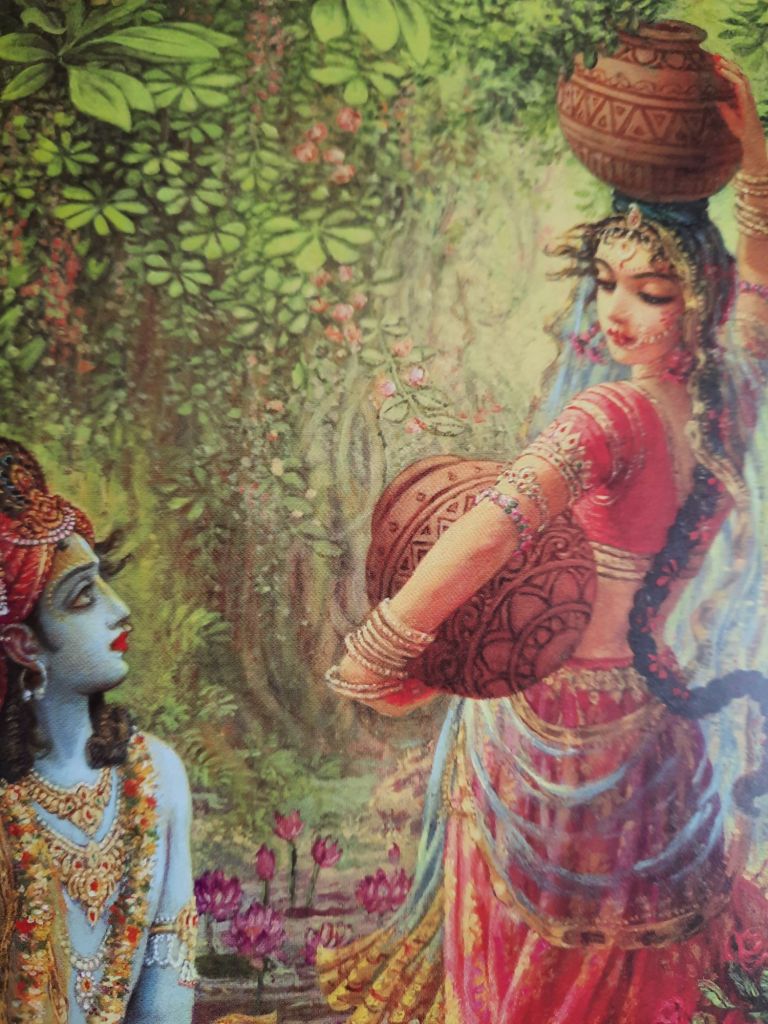
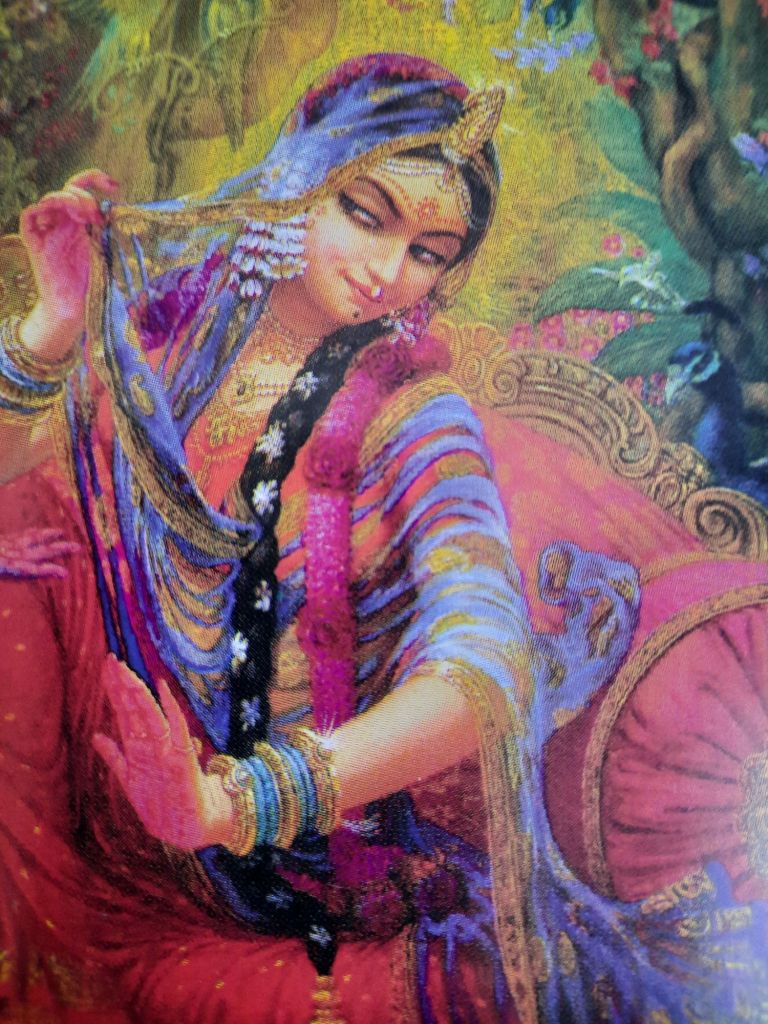
The Smriti , the further elaborations of the six Goswami’s of Vrndavana , written by Srila Rupa and Ragganatha das Goswami’s , elaborations primarily of the Srimad Bhagavatam but also of other Vedic texts , are the absolute essence of the Gaudia Vaisnava teachings . These Goswami’s have been personally taught by Sri Caitanya Mahaprabhu , who is Krishna Himself , He appeared over five hundred years ago in West Bengal . He is none other than Lord Krishna but in the mood of Srimati Radharani , so a hidden incarnation . The 11th Canto of the Srimad Bhagavatam predicts His appearance and the purposes . Gaudia Vaisnavism essentially centres around the ecstatic moods of Srimati Radharani within Vrndavana , but also extends out to Her expansion as Satyabhama in Dwarka , this has been revealed by Srila Rupa Goswami in one of his writings called the Lalita Madhava drama . Srimati Radharani is the Queen of Vrndavana and exhibits the highest feelings of love of God . She is the supreme Nayika “heroine “, and Krishna is the supreme Nayaka” hero ” . Also, the Goswami’s have elaborated on the whole of the village life of Vrndavana , all its residents , and their activities and differing moods of devotion towards Krishna. Detailed account has been written ,the direct following of the Goswami’s have also expanded the works of the Goswami’s , we must know the Goswami’s have decended with Sri Caitanya Mahāprabhu from Goloka Vrndavana and have ” painted ” a trancendental picture of the spiritual kingdoms , they reside there and witness it eternally. The Goswami’s and Sri Caitanya Mahāprabhu also accepted and glorified other Vaisnava writers who wrote previously to their appearance, such as Srila Jayadeva Goswami , Srila Bilvamangala Thakur and Candidas .
Jayadeva Goswami: Lived roughly 300 years before Sri Caitanya, composing the famous Sanskrit lyrical poem Gita Govinda.
Bilvamangala Thakur: Authored Krishna-karnamrita, a deeply emotional Sanskrit work on Krishna’s childhood pastimes.
Candi das: Wrote prominent Bengali padavalis (devotional songs) expressing intense Radha-Krishna prema.
Sri Caitanya Mahāprabhu: Deeply relished and popularized the preexisting writings of these great predecessors during His manifest time on Earth.
The Gaudia Vaisnava acaryas and devotees in general become , by hearing about the spiritual activities of Vrndavana , particularly attracted to their different aspects of the eternal pastimes , and even more so to the different residents of Vrndavana . In that way they become trancendentally absorbed and enter into and feel the moods of these Nitya siddha eternal residents , who live in this eternal and super subjective spiritual realm , wherein blissful , beautiful relationships embellished with pure love and attraction for Lord Krishna in so many many ways are exhibited .
http://www.thevedicspectator.com