The Vedic universe and beyond.


Vedic cosmology
Universal and cultural affairs
The enclosed universe, infinite space, and the accuracy of cosmic calculations .
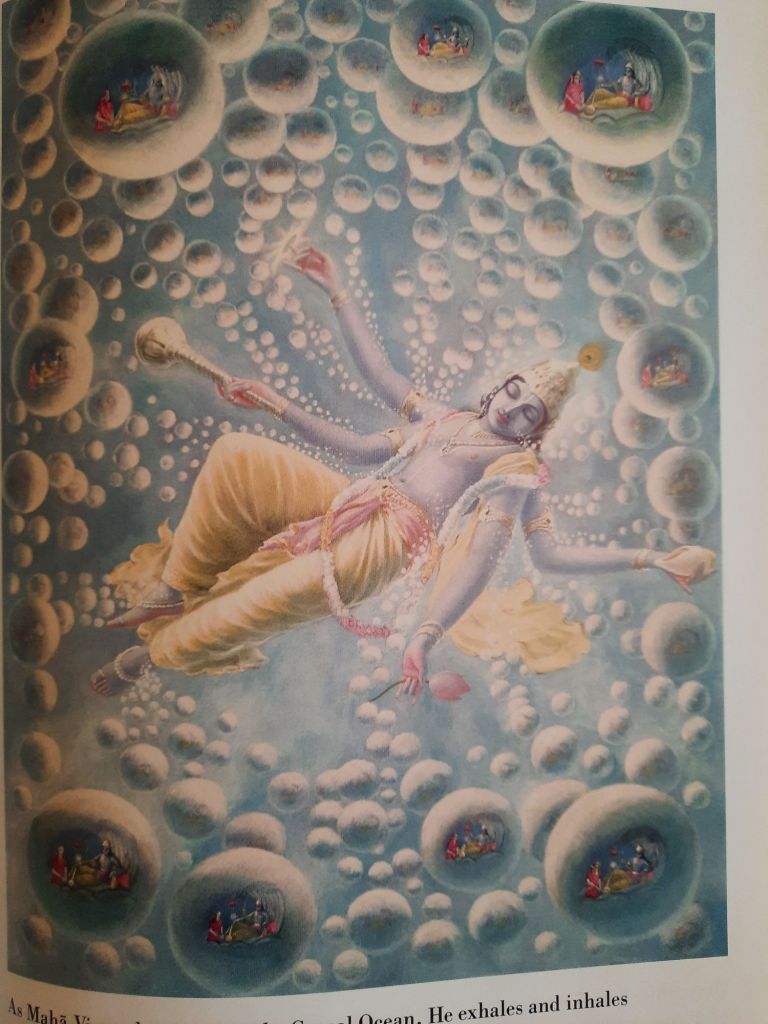
Many ancient cultures spoke of the universe being an enclosed unit with lower , middle, and upper planetary systems within a “shell ”, this indicates that the original cosmological knowledge of the Vedas , in former times was widely distributed . Worldwide cultures were influenced by its teaching due to the extensive distribution of this type of knowledge. It was achieved by ancient trade routes as well as wondering mendicants who were wondering Brahminical educators, as well, exiled kings forming new kingdoms along with their following would distribute Vedic wisdom and it became adopted in similar ways .
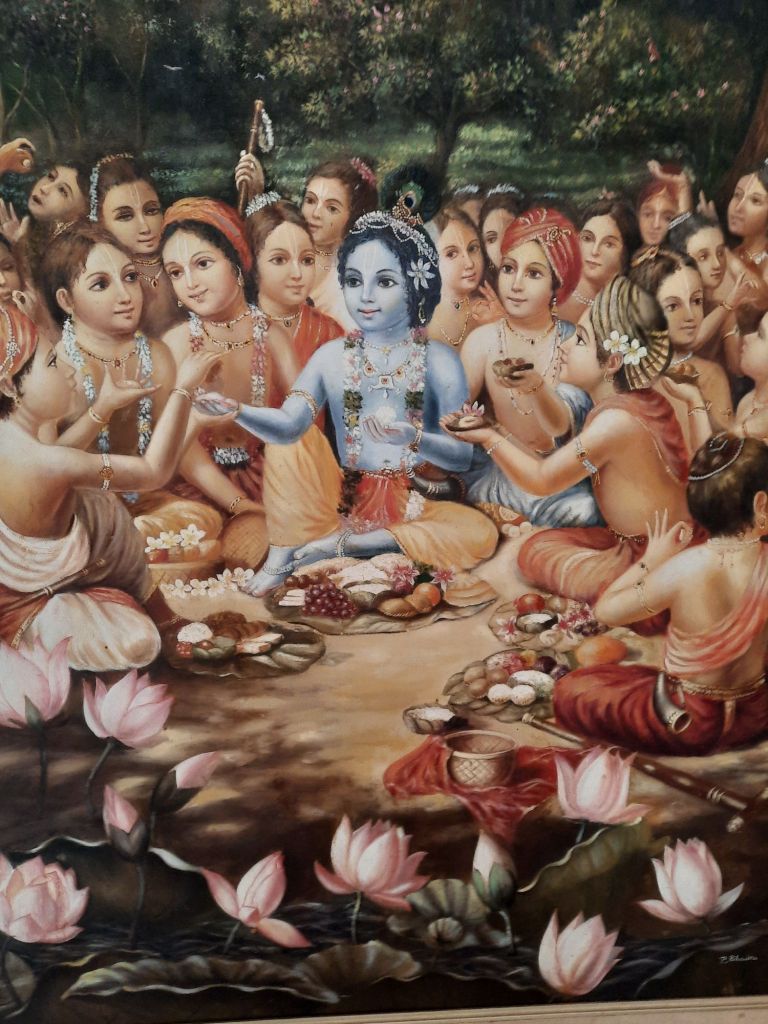
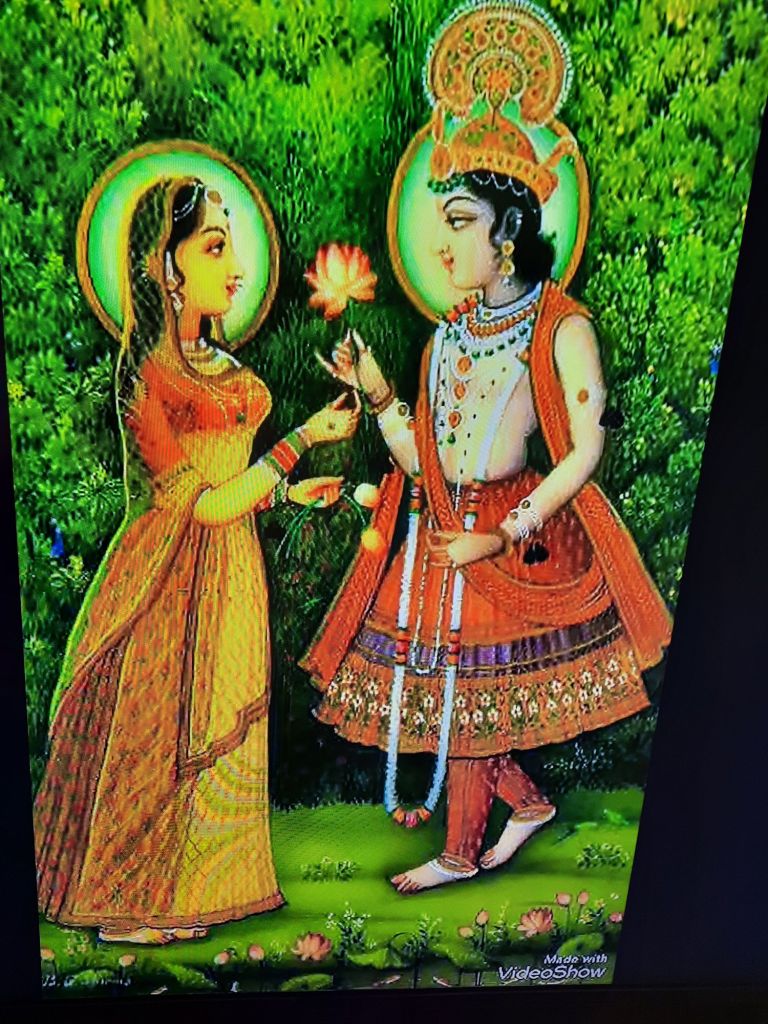
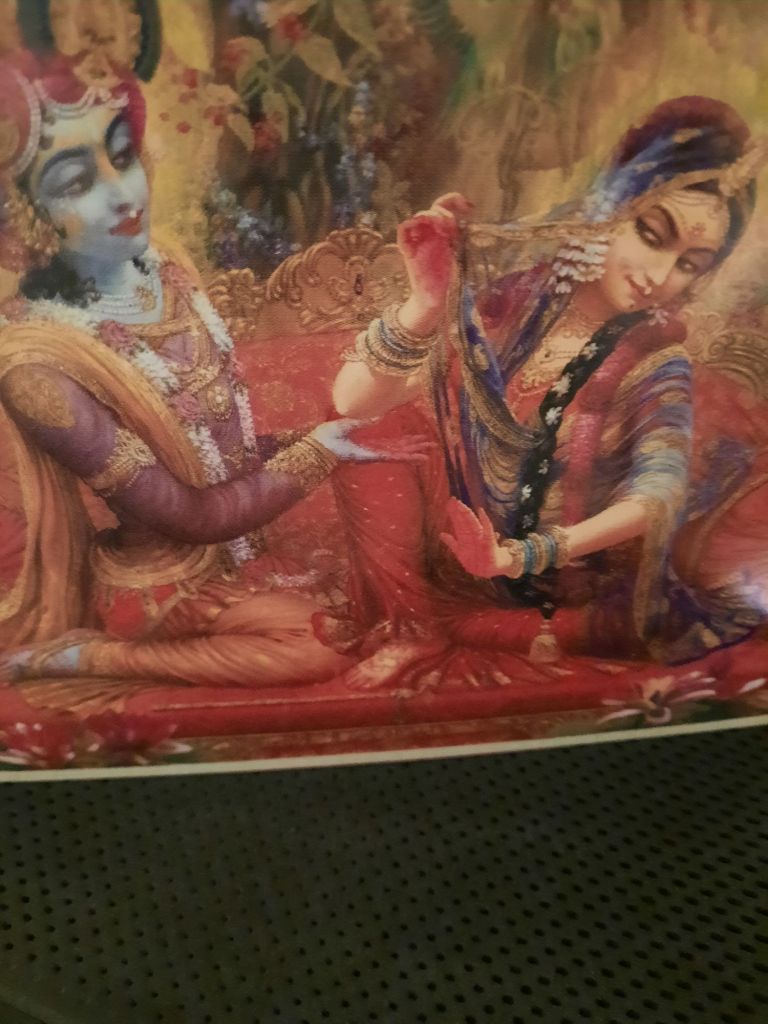
Outside of a universal shell , within which the upper , middle , and lower planetary systems are situated , significant numbers of cultures aligned with Vedic cosmological calculations , they also demonstrated regions where Divinity and His super subjective realms existed but the laws of material nature didn’t. Those regions were outside the universal shell . Multiple cultures remarkably give similar descriptions of the splendour of spiritual varigatedness. Extensive and more detailed descriptions are written in both the Sruti and Smriti scriptures of the Vedas they bring a fascinating insight into the relationships and personalities who reside there . Loving exchanges with a trancendental personalites are described in the Srimad Bhagavatam, Krishna is described as the supreme personality of Godhead, enthralling and beautiful loving relationships that appear as ever new are given descriptions of .The residents are ever enthusiastic to exchange ever increasing love and emotional pleasures .
The Greeks and later the Arabic cultures including other cultures from the South Americas, all held similar understandings of the cosmological calculations of the Vedas . Thus its quite evident cultures were intertwined, and evidence for a much earlier concept of a global world can be thought of .
When the Roman empire conquered most of Europe, having adopted within their own cultures some aspects of Christianity , blind unscientific religious fanaticism began to develop . Some or most of the traditional Vedic ways that the Greeks had adopted in understanding our universe , along with a greater scientific approach to consciousness, began to decline . This unscientific, fanatical religious doctrine was imposed on the public by the use of militant and political might . Later , when the Roman empire came to an end , Christians solely predominanted and scientific thinking outside of the misinterpreted bible came to a complete halt . Fortunately, the old Arabic and Greek texts were still preserved in some places . Mogal empires who were using mathematics and were taking a less dogmatic approach preserved some of the scientific traditions of the thinking of our universal structures, and it was essentially theological in nature . In India, of course, this Vedic cosmological remained in tact .
The Renaissance period gave a rebirth to science and shunned the early unscientific religious fanatical doctrine. A rethinking of the universal order was formed . Modern geometric systems and euclidean math became the new way of looking at life , so much so , that God was pushed right out the picture, and so was dualism . Scientific materialism was born , meaning the mind and body as a separate unit were discouraged and not taught . The mechanistic Darwinian world had begun, scientific materialism that used math and mechanistic dogma , it placed our stars millions of miles away, and a concept of an infinite space, with no God outside of a universal shell was developed . This was taught in educational systems. If there were a God , some thought, it’s probably an impersonal energy . The idea of a separate mind to matter was written off because the mind could not be measured , and math could not be applied .
Measurements of the distance of planets in a multidimensional space, as spoken about by Lisa Randall, the Harvard Prof, may not be so easy to calculate . The laws of physics are said in the Vedas to operate differently in different parts of the universe, so what is far is near ,what is near is far in a multidimensional universe.
The traditional and ancient cosmological cultures, along with their sciences, should not be so hastily discarded and rubbished or replaced by scientific materialism , which in itself is an uncalibrated dogma . Scientific materialism can not account for a mind but rather believes it to only be simply neurons firing in a mechanistic mathematical brain . These events are all supposedly happening by chance in a chance universe . This mechanistic view could be said to be ludicrously absurd and discards the notion of the intelligence and obvious design in just about everything we see . Also, it ignores the perfect math in nature , where there is perfect mathematics , you can bet your bottom dollar there is a perfect mathematician behind it .
http://www.thevedicspectator.com